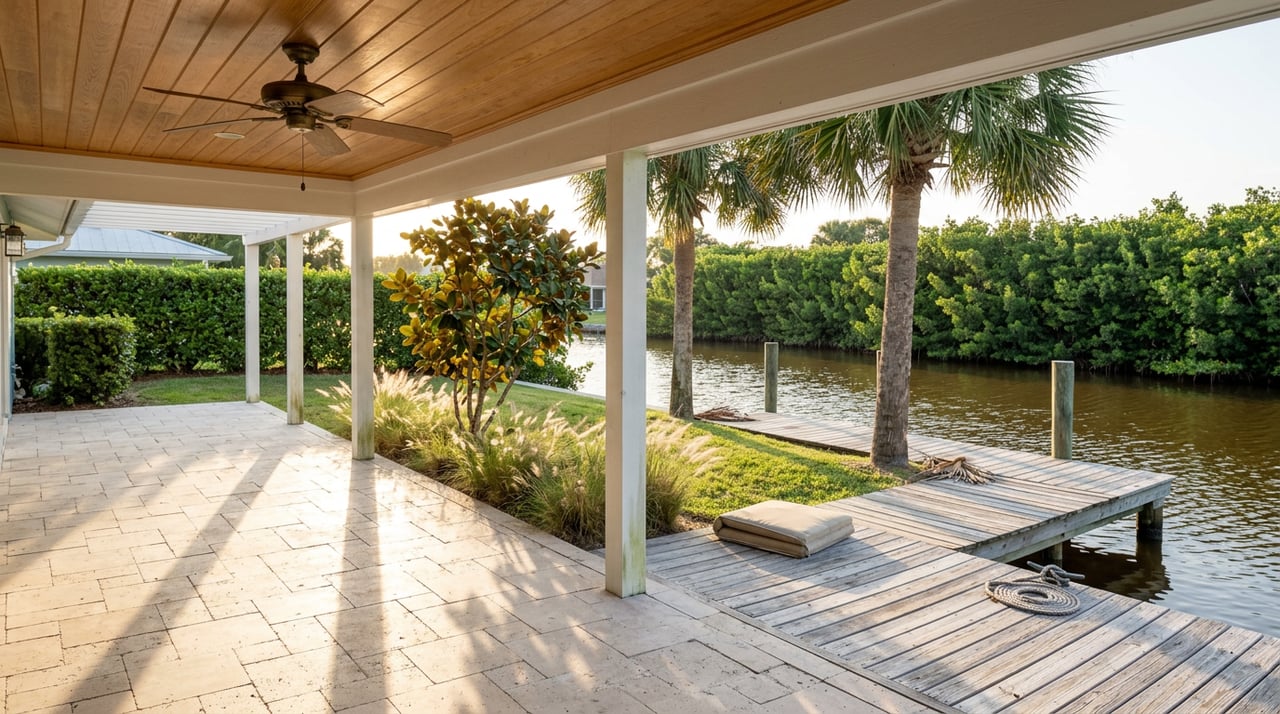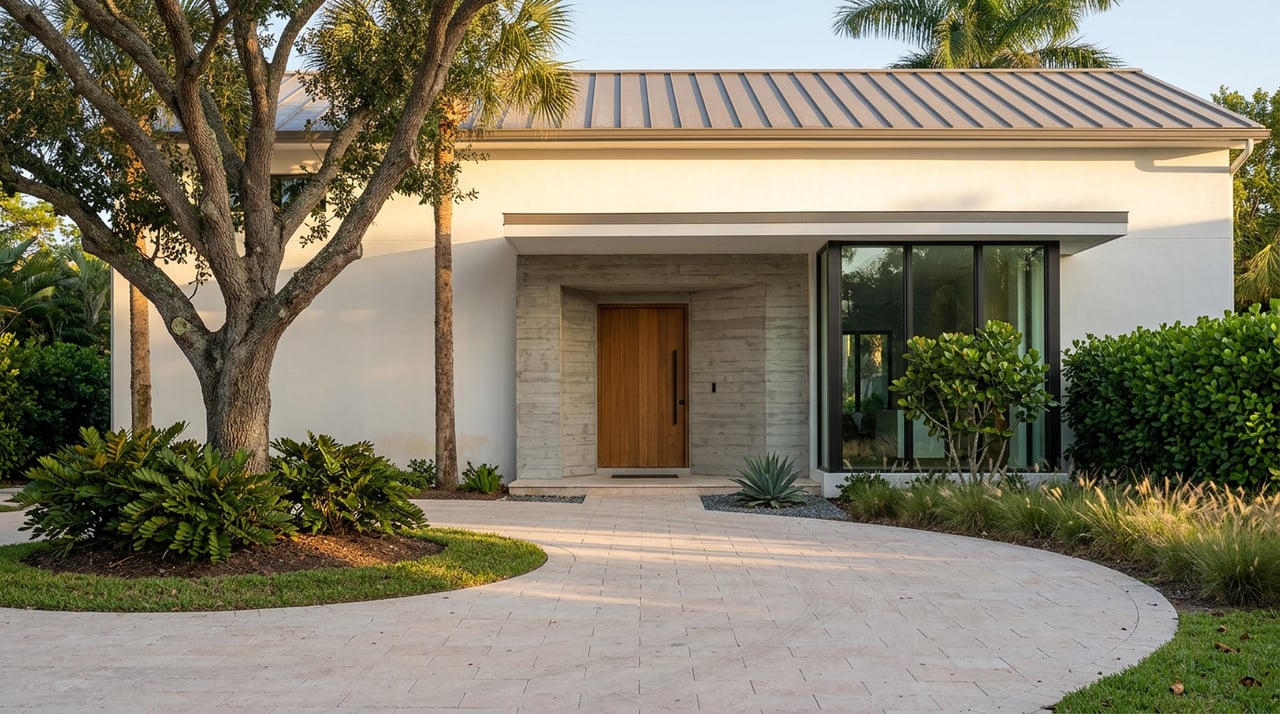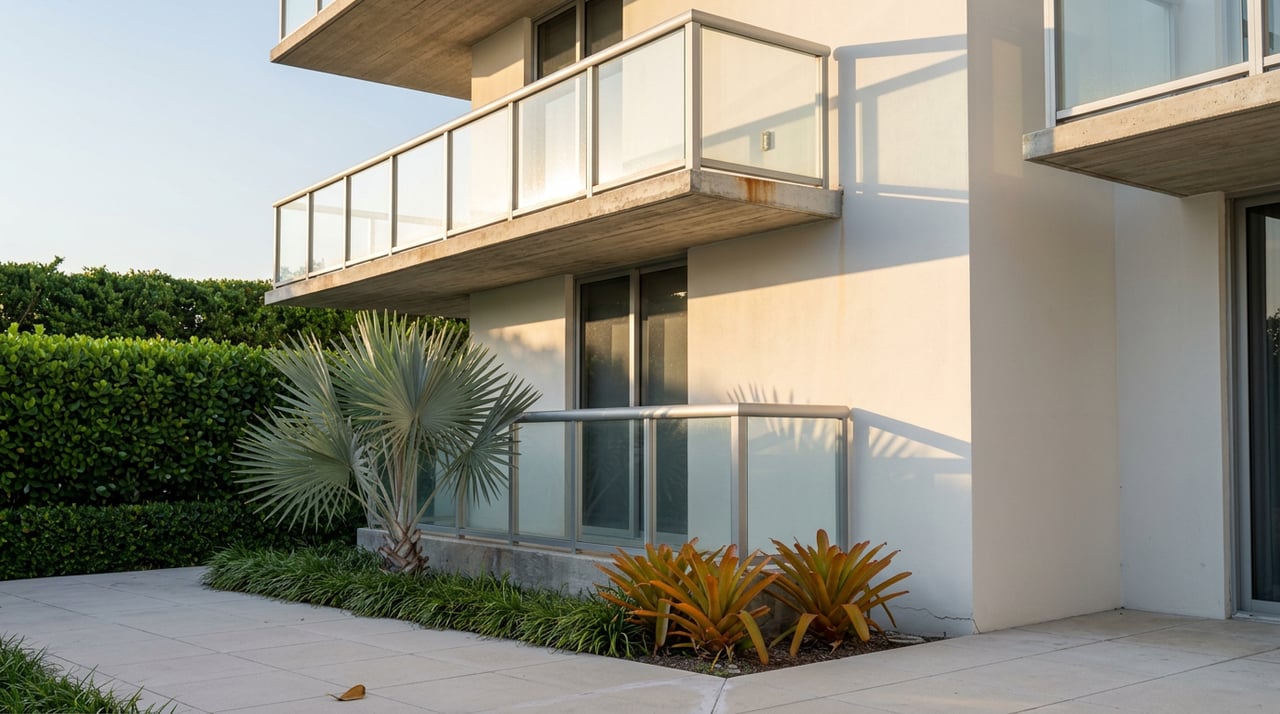
Walk the brick-paved loop of Golden Gate Point on any given morning and you pass roughly sixty years of Sarasota condominium history in about ten minutes. A boutique building from 1970, eight units spread across six floors. A few hundred feet later, a glass tower with a private elevator and a wine room, finished in the 2020s. Same peninsula. Same bay. Sometimes within a few dollars of each other on price per square foot.
That last part is the trap. Two downtown Sarasota condos priced identically per square foot, whether on Golden Gate Point or along the Palm Avenue and Ringling Boulevard corridor, are not carrying the same real cost in 2026. Florida's post-Surfside condo law has quietly rewritten what that listing price actually represents, and the gap between a building that's caught up on its obligations and one that hasn't is the number buyers keep overlooking.
What Changed, and Why Almost Every Downtown Building Qualifies
On June 24, 2021, Champlain Towers South collapsed in Surfside, Florida, killing 98 people. Within a year, the legislature passed Senate Bill 4-D, creating a mandatory statewide structural inspection and reserve funding regime for condominium and cooperative buildings. Any residential building three habitable stories or taller now falls under the law, whether it's a six-unit boutique or a 200-unit tower.
The law does two things. First, it requires a milestone inspection, a structural evaluation by a licensed engineer or architect, once a building reaches 25 years of age if it sits within three miles of the coast, or 30 years if it doesn't. Nearly every downtown Sarasota address clears that coastal threshold, which means buildings from Golden Gate Point's original 1960s and 1970s wave are decades past their trigger date. Buildings from the early-2000s boom are aging into the requirement too. The Renaissance at Rosemary Place, completed in 2001 near the Van Wezel, hits the 25-year milestone trigger this year.
Second, it requires a Structural Integrity Reserve Study, or SIRS, that assesses nine structural components and calculates what the association must set aside each year to keep pace with future repairs. This is where the law stopped being a paperwork exercise and started changing what buyers actually pay. Under the state's current rules, associations with budgets adopted before December 31, 2024 were allowed one last vote to waive or reduce those reserves, but must begin funding them according to the study starting January 1, 2026. Associations with budgets adopted on or after that date never had the waiver option at all. For decades, boards kept dues low by voting not to fund reserves. That option is closing, building by building, whether the board is ready or not.
The Number That Actually Prices the Condo
Here's the number worth asking for before price per square foot: the percent-funded figure in the building's SIRS. It tells you what share of the projected repair cost the association actually has saved, versus what it's still hoping to collect from owners later.
| Reserve funding level | What it typically means for a buyer |
|---|---|
| 70% or higher | Lower risk of a near-term special assessment; dues already reflect the real cost |
| 30% to 70% | Some cushion, but expect dues increases as the association catches up |
| Under 30% | Special assessment is likely, sometimes within one to two years |
Reported special assessments tied to this wave of compliance have ranged from a few thousand dollars to well over $100,000 per unit for major structural work. That range is why two units at the same list price, in buildings a block apart, can carry entirely different total costs once you add in what's coming.
Why Financing Quietly Picks Sides
The reserve number does more than predict a future bill. It decides who can even buy the unit today.
Conventional lenders increasingly treat buildings without a completed SIRS, or with reserves that don't match the study's recommendation, as non-warrantable. That doesn't mean a mortgage is impossible everywhere, but it does mean financing terms tighten or disappear for a meaningful share of downtown's older inventory, pushing those buildings toward all-cash buyers by default rather than by choice.
That shift is already visible in the numbers. In February 2026, the local Realtor association reported cash purchases accounted for 68 percent of condo closings countywide, compared with 47 percent for single-family homes over the same period. A gap that wide between two segments of the same local market is not a coincidence of buyer preference. It's a financing filter working exactly as the reserve rules intended, sorting buildings by compliance status before an appraisal ever gets ordered.
The December Deadline Compressing Every Timeline
Buyers shopping downtown right now are running into that filter mid-negotiation, because the clock on this transition is real and close. Under current state guidance, any association required to complete a milestone inspection by December 31, 2026 may complete its SIRS at the same time, but under no circumstances may the SIRS be finished after that date. That's just under five months from today. Boards that have been slow to commission a study are now compressing a process that normally takes months into whatever time is left in the year, and the studies that come back late or incomplete are exactly the ones that surface a reserve shortfall right as a buyer is trying to close.
It's worth seeing this deadline against what's still being built. In July 2026, Sarasota's planning board approved Saravela, an 18-story, 282-unit tower planned for a full city block along North Tamiami Trail, developed by the Chicago-based GSP Development. New downtown supply keeps arriving precisely because compliant, newly built inventory doesn't carry the same reserve uncertainty older buildings do. That's part of why price per square foot alone can't tell you which building is the better buy. A newer tower's higher sticker price may already include the cost that an older building's owners haven't paid yet.
Golden Gate Point tells the same story in miniature. The peninsula's tallest buildings were capped at 75 feet by a 1973 city ordinance, and a 1978 survey counted 680 apartments and 1,447 residents packed onto the small strip of land. By 2005, a developer paid $46 million for the aging Pier 550, a converted 1950s motel, specifically to demolish it and build new. Redevelopment on this peninsula has been happening in waves for two decades. The buildings still standing from the original wave are the ones now facing their first real reserve reckoning under the new law.
What to Ask Before You Write the Offer
None of this should scare a buyer away from an older downtown or Golden Gate Point building. Plenty are well managed and worth the premium. It just means the due diligence has to start earlier than most buyers expect.
- Request the current Structural Integrity Reserve Study and its percent-funded figure, not just a summary.
- Ask for the most recent milestone inspection report, including whether it's Phase One or Phase Two.
- Pull the last two years of board meeting minutes, where pending assessments and reserve votes actually get recorded.
- Confirm the building's certificate of occupancy date to verify which inspection cycle applies.
- Ask your lender directly whether the building is currently warrantable under its guidelines, before you fall in love with the unit.
A Few Questions We Hear Often
Does this law apply to single-family homes on Golden Gate Point or elsewhere downtown? No. The milestone inspection and SIRS requirements apply only to condominium and cooperative buildings three habitable stories or taller. Single-family and townhome-style properties fall outside this framework.
If a building already completed its SIRS, is the risk gone? Not automatically. A completed study just means you can see the number. A building can complete its SIRS and still show under 30 percent funded, which tells you an assessment is likely even though the paperwork is technically done.
Does a higher HOA fee always mean a healthier building? Not by itself, but it's a reasonable starting signal. A building already funding its reserves at the level the SIRS recommends will usually show higher current dues than a comparable building that's still catching up. The higher number today is often the lower total cost over five years.
Price per square foot will always be the first thing a listing shows you. In downtown Sarasota's condo market this year, it's rarely the number that decides what you actually pay. Our team at the Fox Leiter Team reviews the reserve study and inspection status on every building before we let a client fall in love with a unit, because that's the paperwork that tells you the real story. If you're comparing buildings on Golden Gate Point or anywhere downtown, reach out and we'll walk through what each one's numbers actually mean.